Technology is constantly evolving and the field of software testing is undergoing continuous evolution. With the ongoing developments in technology, software testing experts have come up with the latest trends for the software testing industry.
In this guide, we’re keeping track of all of the biggest software trends this year and how you can apply to your work as a software tester in your business.
Software Testing Trends To Look Out For In 2020
Big Data Testing
Big data testing has already gained a lot of importance and will still continue to grow in the near future. This testing helps in the evaluation of the functionality as well as the performance of different applications. In the big data testing, the testers need to verify the effective processing of the terabytes of data. While data quality is an important factor of this testing, the quality is checked in terms of accuracy, validity, consistency, conformity, duplication, and more.
Test Automation
As per a report, the overall global automation testing market size is expected to grow from$12.6 billion in 2019 to $28.8 billion by 2024. The growth is staggering at the Compound Annual Growth Rate (CAGR) of 18% during the forecast period. Increasing the adoption of DevOps and Agile are some of the key factors driving the growth of the automation testing market.
IoT Testing
IoT has become a popular full-fledged market in recent times. By the year 2020, the number of smart devices is expected to increase to 20.8 billion. With the rapid growth of the IT sector, the Internet of Things market is also growing rapidly. IoT, as the latest trend of software testing, will help in safety assessment, evaluation of data integrity, monitoring of connection delay, and scalability testing.
DevOps development
According to Statista, only 9% of respondents have not yet accepted or are not planning to take DevOps. Such an indicator suggests that testing and monitoring of processes go to the same level with direct development. In other words, testers now “come into play” at the start of development, and not at the end. Writing and testing processes will be even closer to ensure continuous iteration.
Demands for Cybersecurity and Risk Compliance
The digital revolution comes with many security threats. As such, CIOs and CTOs from almost every enterprise across all sectors continue to recognize the importance ofsecurity testingfor their software, systems, applications, network. Software teams have to even work with their partners to make their products more resilient to threats, taking the cybersecurity shield to the new level.
Testing focused on Progressive Web Apps
Introduction of Progressive Web Apps (PWA) by Google marked the dawn of a new era in mobile app development. With PWA, you don’t need to download and install the app on the mobile phone, rather a web application (app) that makes use of modern web capabilities to deliver a web-like experience to the end-users. As per many case studies, PWA’s have resulted in better user engagement,new user conversions, etc. for companies like Twitter, AliExpress, and more.
Agile Test Automation
Although test automation has been one of the key QA trends in 2019, it is believed that automation testing trends in 2020 should move to an entirely new level compared with the previous year. According to the report from CollabNet VerionOne, in 2019, 97% of companies reported practicing Agile methods and in 2020 the number is still growing.
Check out AreusDev video on the top Software Tester trends of 2020 below.
The Coronavirus Explained & What You Should Do!
To find out more about how Coronavirus (COVID-9) please watch the video provided below.
In December 2019 the Chinese authorities notified the world that a virus was spreading through their communities. In the following months it spread to other countries, with cases doubling within days. This virus is the “Severe acute respiratory syndrome-related coronavirus 2”, that causes the disease called COVID19, and that everyone simply calls Coronavirus. What actually happens when it infects a human and what should we all do?
Get in touch!
To find out more about how Estio Training can support you with developing the very best Digital Apprentices, complete this form to arrange contact with one of our representitives.
What is Data Science? This is a question that a lot of people ask because we also have a field known as business Intelligence, but what are the differences? are they even known as the same things? In this post originally by Hemant Sharma of Edureka, we’ll be be covering the following topics.
The need for Data Science.
What is Data Science?
How is it different from Business Intelligence (BI) and Data Analysis?
The lifecycle of Data Science with the help of a use case.
By the end of this blog, you will be able to understand what is Data Science and its role in extracting meaningful insights from the complex and large sets of data all around us.
Let’s Understand Why We Need Data Science
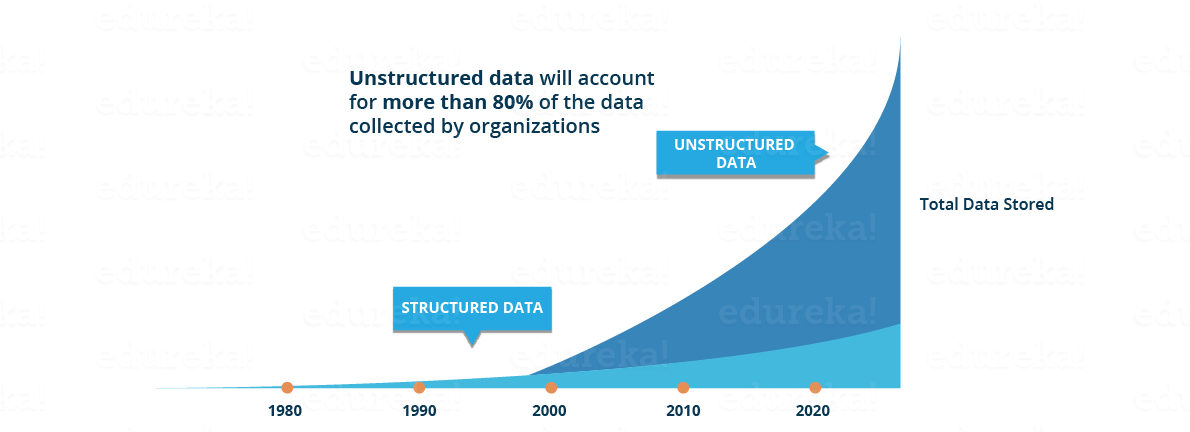
Traditionally, the data that we had was mostly structured and small in size, which could be analyzed by using the simple BI tools. Unlike data in the traditional systems which was mostly structured, today most of the data is unstructured or semi-structured. Let’s have a look at the data trends in the image given below which shows that by 2020, more than 80 % of the data will be unstructured.
This data is generated from different sources like financial logs, text files, multimedia forms, sensors, and instruments. Simple BI tools are not capable of processing this huge volume and variety of data. This is why we need more complex and advanced analytical tools and algorithms for processing, analyzing and drawing meaningful insights out of it.
This is not the only reason why Data Science has become so popular. Let’s dig deeper and see how Data Science is being used in various domains.
How about if you could understand the precise requirements of your customers from the existing data like the customer’s past browsing history, purchase history, age, and income. No doubt you had all this data earlier too, but now with the vast amount and variety of data, you can train models more effectively and recommend the product to your customers with more precision. Wouldn’t it be amazing as it will bring more business to your organization?
Let’s take a different scenario to understand the role of Data Science in decision making. How about if your car had the intelligence to drive you home? The self-driving cars collect live data from sensors, including radars, cameras, and lasers to create a map of its surroundings. Based on this data, it takes decisions like when to speed up, when to speed down, when to overtake, where to take a turn – making use of advanced machine learning algorithms.
Let’s see how Data Science can be used in predictive analytics. Let’s take weather forecasting as an example. Data from ships, aircraft, radars, satellites can be collected and analyzed to build models. These models will not only forecast the weather but also help in predicting the occurrence of any natural calamities. It will help you to take appropriate measures beforehand and save many precious lives.
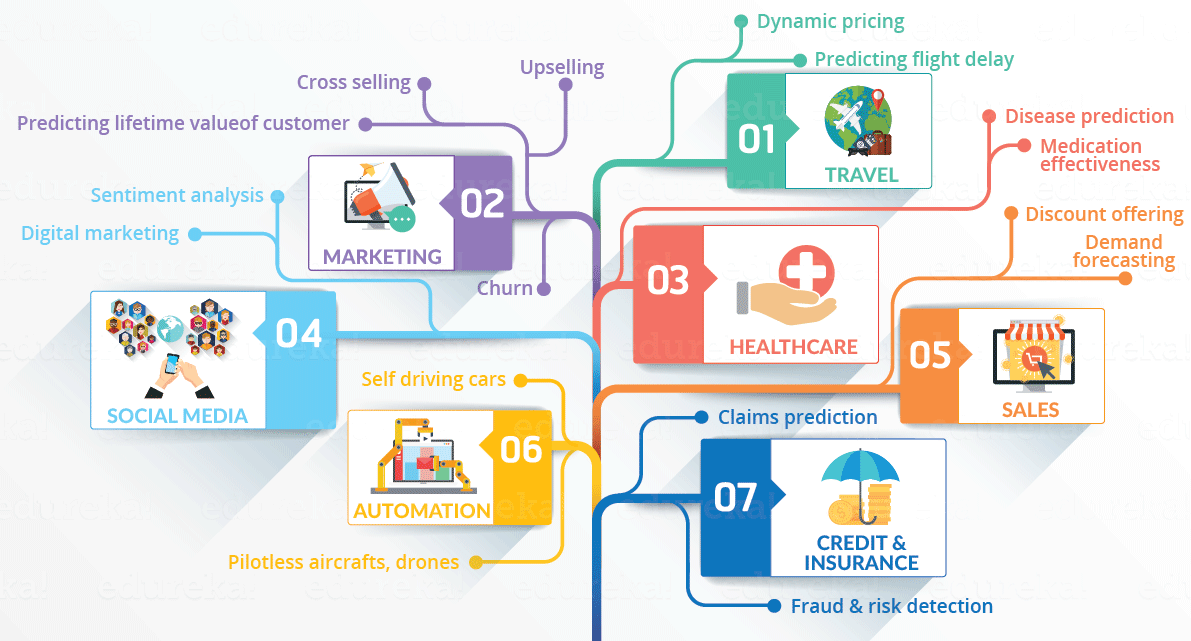
Let’s have a look at the below infographic to see all the domains where Data Science is creating its impression.
Now that you have understood the need for Data Science, let’s understand what is Data Science.
What is Data Science?
The use of the term Data Science is increasingly common, but what does it exactly mean? What skills do you need to become a Data Scientist? What is the difference between BI and Data Science? How are decisions and predictions made in Data Science? These are some of the questions that will be answered further.
First, let’s see what is Data Science. Data Science is a blend of various tools, algorithms, and machine learning principles with the goal to discover hidden patterns from the raw data. How is this different from what statisticians have been doing for years?
The answer lies in the difference between explaining and predicting.
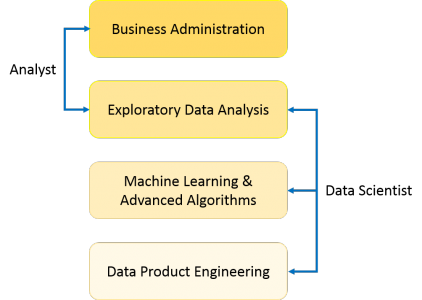
As you can see from the above image, a Data Analyst usually explains what is going on by processing history of the data. On the other hand, Data Scientist not only does the exploratory analysis to discover insights from it, but also uses various advanced machine learning algorithms to identify the occurrence of a particular event in the future. A Data Scientist will look at the data from many angles, sometimes angles not known earlier.
So, Data Science is primarily used to make decisions and predictions making use of predictive causal analytics, prescriptive analytics (predictive plus decision science) and machine learning.
Predictive causal analytics – If you want a model that can predict the possibilities of a particular event in the future, you need to apply predictive causal analytics. Say, if you are providing money on credit, then the probability of customers making future credit payments on time is a matter of concern for you. Here, you can build a model that can perform predictive analytics on the payment history of the customer to predict if the future payments will be on time or not.
Prescriptive analytics: If you want a model that has the intelligence of taking its own decisions and the ability to modify it with dynamic parameters, you certainly need prescriptive analytics for it. This relatively new field is all about providing advice. In other terms, it not only predicts but suggests a range of prescribed actions and associated outcomes. The best example for this is Google’s self-driving car which I had discussed earlier too. The data gathered by vehicles can be used to train self-driving cars. You can run algorithms on this data to bring intelligence to it. This will enable your car to make decisions like when to turn, which path to take when to slow down or speed up.
Machine learning for making predictions — If you have transactional data of a finance company and need to build a model to determine the future trend, then machine learning algorithms are the best bet. This falls under the paradigm of supervised learning. It is called supervised because you already have the data based on which you can train your machines. For example, a fraud detection model can be trained using a historical record of fraudulent purchases.
Machine learning for pattern discovery — If you don’t have the parameters based on which you can make predictions, then you need to find out the hidden patterns within the data-set to be able to make meaningful predictions. This is nothing but the unsupervised model as you don’t have any predefined labels for grouping. The most common algorithm used for pattern discovery is Clustering. Let’s say you are working in a telephone company and you need to establish a network by putting towers in a region. Then, you can use the clustering technique to find those tower locations which will ensure that all the users receive optimum signal strength.
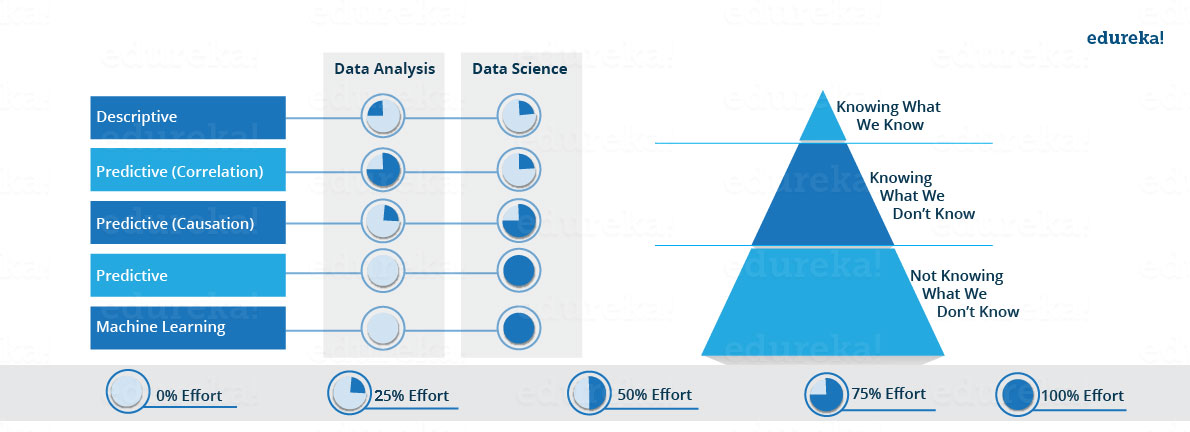
Let’s see how the proportion of above-described approaches differ for Data Analysis as well as Data Science. As you can see in the image below, Data Analysis includes descriptive analytics and prediction to a certain extent. On the other hand, Data Science is more about Predictive Causal Analytics and Machine Learning.
80% INTERVIEW REJECTIONS HAPPEN IN FIRST 90 SECONDS
Take Data Scientist Mock Interview
Get Interviewed by Industry Experts
Personalized interview feedback
I am sure you might have heard of Business Intelligence (BI) too. Often Data Science is confused with BI. I will state some concise and clear contrasts between the two which will help you in getting a better understanding. Let’s have a look.
Business Intelligence (BI) vs. Data Science
BI basically analyzes the previous data to find hindsight and insight to describe the business trends. BI enables you to take data from external and internal sources, prepare it, run queries on it and create dashboards to answer the questions like quarterly revenue analysis or business problems. BI can evaluate the impact of certain events in the near future.
Data Science is a more forward-looking approach, an exploratory way with the focus on analyzing the past or current data and predicting the future outcomes with the aim of making informed decisions. It answers the open-ended questions as to “what” and “how” events occur.
Let’s have a look at some contrasting features.
Features
Business Intelligence (BI)
Data Science
Data Sources
Structured (Usually SQL, often Data Warehouse)
Both Structured and Unstructured
( logs, cloud data, SQL, NoSQL, text)
Approach
Statistics and Visualization
Statistics, Machine Learning, Graph Analysis, Neuro- linguistic Programming (NLP)
Focus
Past and Present
Present and Future
Tools
Pentaho, Microsoft BI, QlikView, R
RapidMiner, BigML, Weka, R
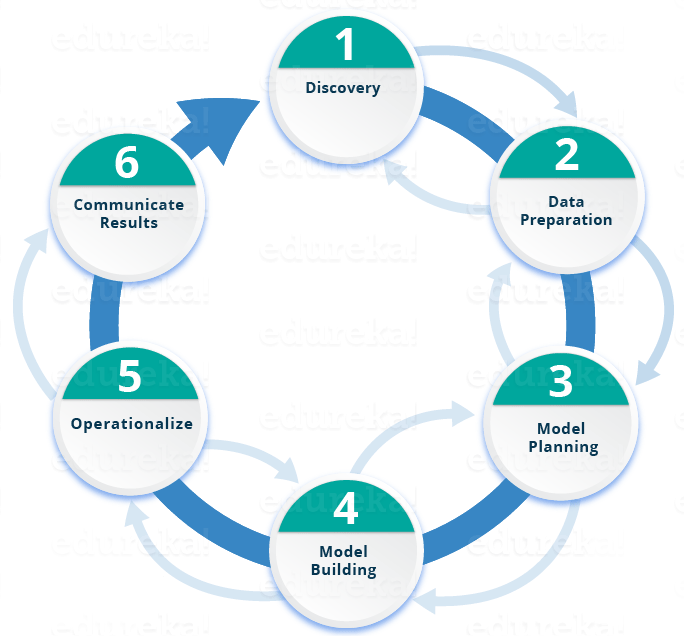
This was all about what is Data Science, now let’s understand the lifecycle of Data Science.
A common mistake made in Data Science projects is rushing into data collection and analysis, without understanding the requirements or even framing the business problem properly. Therefore, it is very important for you to follow all the phases throughout the lifecycle of Data Science to ensure the smooth functioning of the project.
Lifecycle of Data Science
Here is a brief overview of the main phases of the Data Science Lifecycle:
Phase 1—Discovery: Before you begin the project, it is important to understand the various specifications, requirements, priorities and required budget. You must possess the ability to ask the right questions. Here, you assess if you have the required resources present in terms of people, technology, time and data to support the project. In this phase, you also need to frame the business problem and formulate initial hypotheses (IH) to test.
Phase 2—Data preparation:In this phase, you require analytical sandbox in which you can perform analytics for the entire duration of the project. You need to explore, preprocess and condition data prior to modeling. Further, you will perform ETLT (extract, transform, load and transform) to get data into the sandbox. Let’s have a look at the Statistical Analysis flow below.
You can use R for data cleaning, transformation, and visualization. This will help you to spot the outliers and establish a relationship between the variables. Once you have cleaned and prepared the data, it’s time to do exploratory analytics on it. Let’s see how you can achieve that.
Phase 3—Model planning:Here, you will determine the methods and techniques to draw the relationships between variables. These relationships will set the base for the algorithms which you will implement in the next phase. You will apply Exploratory Data Analytics (EDA) using various statistical formulas and visualization tools.
Let’s have a look at various model planning tools.
R has a complete set of modeling capabilities and provides a good environment for building interpretive models.
SQL Analysis services can perform in-database analytics using common data mining functions and basic predictive models.
SAS/ACCESS can be used to access data from Hadoop and is used for creating repeatable and reusable model flow diagrams.
Although, many tools are present in the market but R is the most commonly used tool.
Now that you have got insights into the nature of your data and have decided the algorithms to be used. In the next stage, you will apply the algorithm and build up a model.
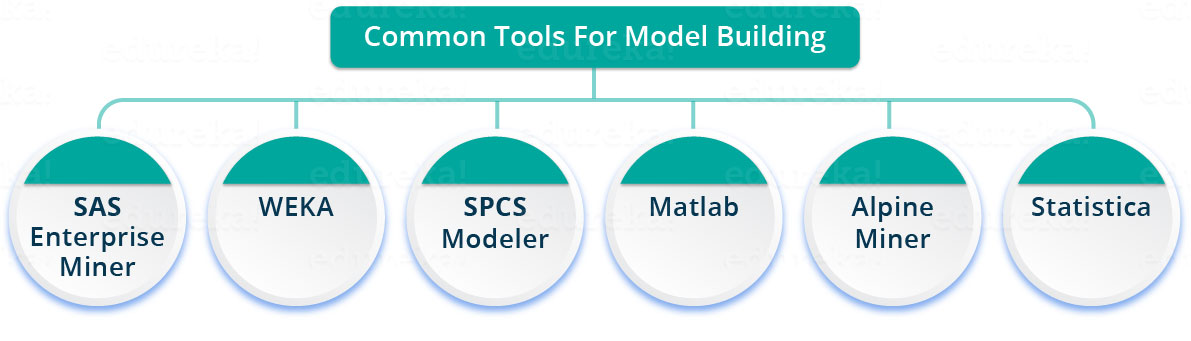
Phase 4—Model building: In this phase, you will develop data sets for training and testing purposes. You will consider whether your existing tools will suffice for running the models or it will need a more robust environment (like fast and parallel processing). You will analyze various learning techniques like classification, association and clustering to build the model.
You can achieve model building through the following tools.
Phase 5— Operationalise:In this phase, you deliver final reports, briefings, code and technical documents. In addition, sometimes a pilot project is also implemented in a real-time production environment. This will provide you a clear picture of the performance and other related constraints on a small scale before full deployment.
Phase 6— Communicate results: Now it is important to evaluate if you have been able to achieve your goal that you had planned in the first phase. So, in the last phase, you identify all the key findings, communicate to the stakeholders and determine if the results of the project are a success or a failure based on the criteria developed in Phase 1.
Now, I will take a case study to explain you the various phases described above.
Case Study: Diabetes Prevention
What if we could predict the occurrence of diabetes and take appropriate measures beforehand to prevent it? In this use case, we will predict the occurrence of diabetes making use of the entire life-cycle that we discussed earlier. Let’s go through the various steps.
Step 1:
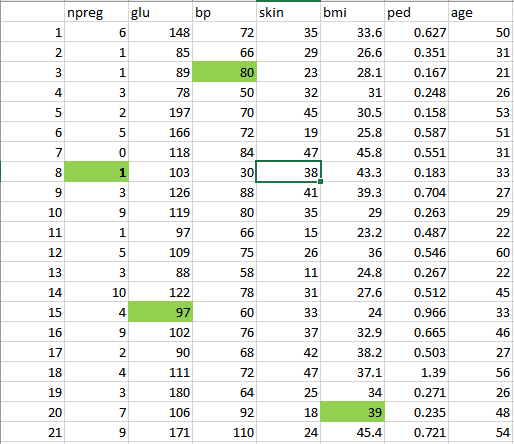
First, we will collect the data based on the medical history of the patient as discussed in Phase 1. You can refer to the sample data below.
As you can see, we have the various attributes as mentioned below.
Attributes:
npreg – Number of times pregnant
glucose – Plasma glucose concentration
bp – Blood pressure
skin – Triceps skinfold thickness
bmi – Body mass index
ped – Diabetes pedigree function
age – Age
income – Income
Step 2:
Now, once we have the data, we need to clean and prepare the data for data analysis.
This data has a lot of inconsistencies like missing values, blank columns, abrupt values and incorrect data format which need to be cleaned.
Here, we have organized the data into a single table under different attributes – making it look more structured.
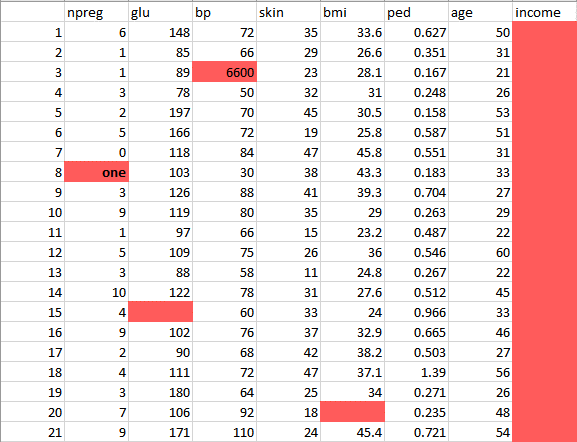
Let’s have a look at the sample data below.
This data has a lot of inconsistencies.
In the column npreg, “one” is written in words, whereas it should be in the numeric form like 1.
In column bp one of the values is 6600 which is impossible (at least for humans) as bp cannot go up to such huge value.
As you can see the Income column is blank and also makes no sense in predicting diabetes. Therefore, it is redundant to have it here and should be removed from the table.
So, we will clean and preprocess this data by removing the outliers, filling up the null values and normalizing the data type. If you remember, this is our second phase which is data preprocessing.
Finally, we get the clean data as shown below which can be used for analysis.
Step 3: Now let’s do some analysis as discussed earlier in Phase 3.
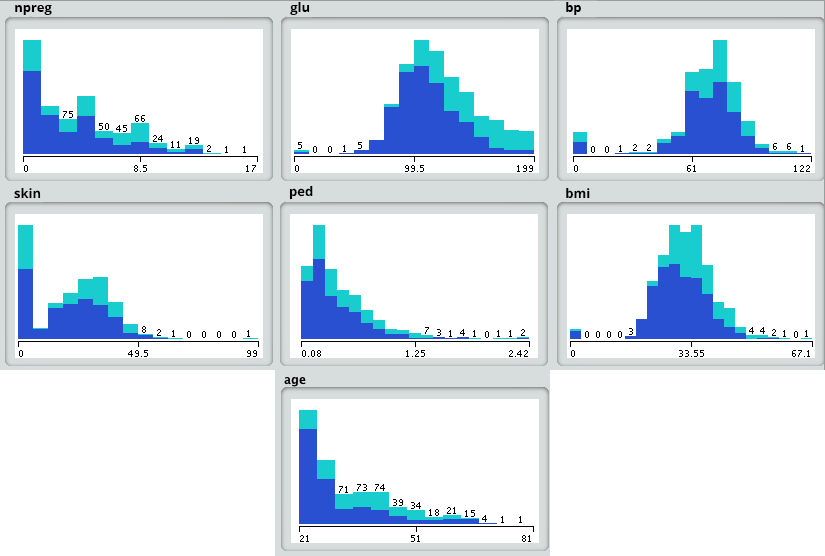
First, we will load the data into the analytical sandbox and apply various statistical functions on it. For example, R has functions like describe which gives us the number of missing values and unique values. We can also use the summary function which will give us statistical information like mean, median, range, min and max values.
Then, we use visualization techniques like histograms, line graphs, box plots to get a fair idea of the distribution of data.
Step 4:
Now, based on insights derived from the previous step, the best fit for this kind of problem is the decision tree. Let’s see how?
Since, we already have the major attributes for analysis like npreg, bmi, etc., so we will use supervised learning technique to build a model here.
Further, we have particularly used decision tree because it takes all attributes into consideration in one go, like the ones which have a linear relationship as well as those which have a non-linear relationship. In our case, we have a linear relationship between npreg and age, whereas the nonlinear relationship between npreg and ped.
Decision tree models are also very robust as we can use the different combination of attributes to make various trees and then finally implement the one with the maximum efficiency.
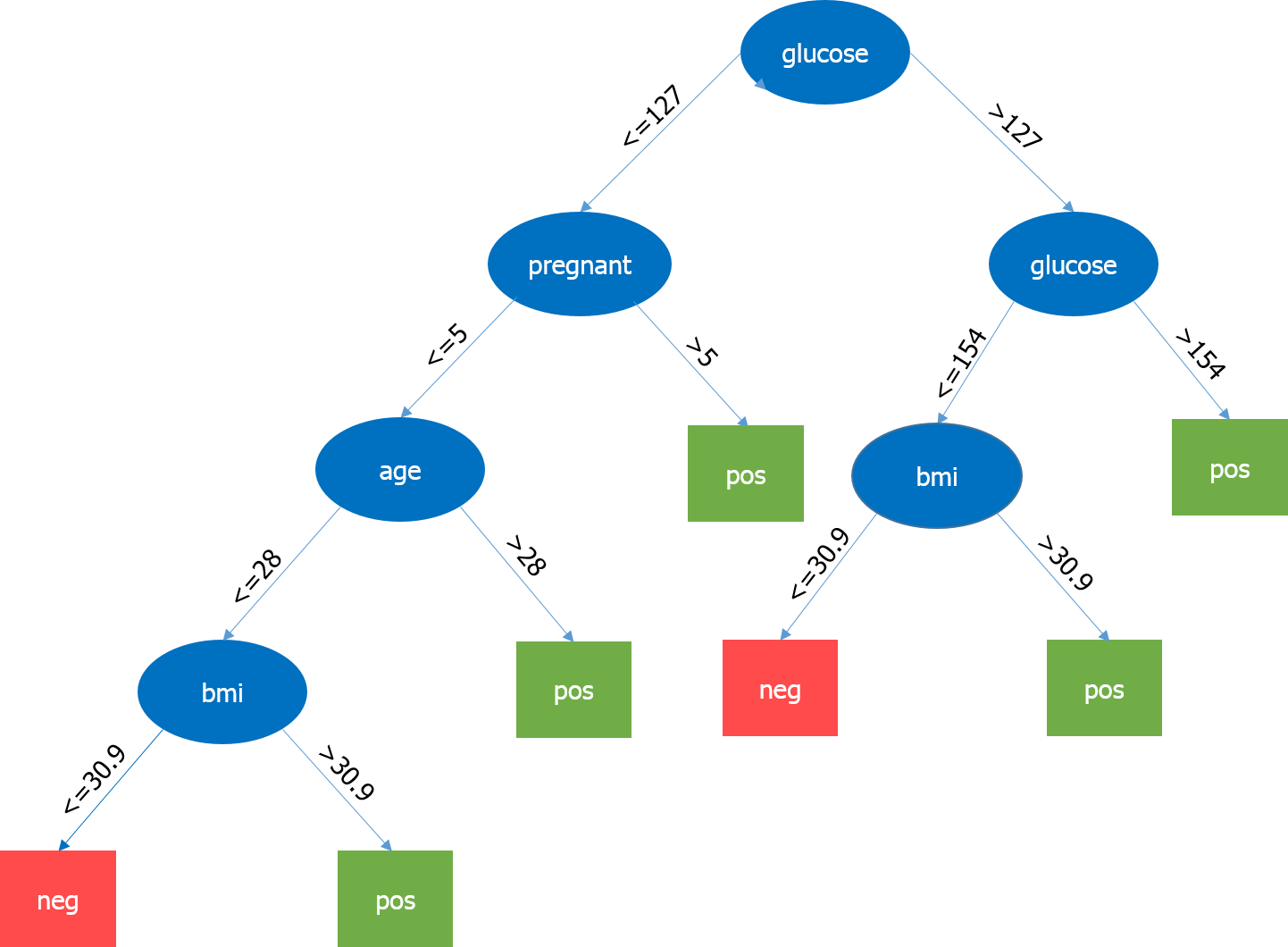
Let’s have a look at our decision tree.
NEED HELP FOR YOUR UPCOMING INTERVIEW?
Take Data Scientist Mock Interview
Get Interviewed by Industry Experts
Personalized interview feedback
Here, the most important parameter is the level of glucose, so it is our root node. Now, the current node and its value determine the next important parameter to be taken. It goes on until we get the result in terms of pos or neg. Pos means the tendency of having diabetes is positive and neg means the tendency of having diabetes is negative.
In this phase, we will run a small pilot project to check if our results are appropriate. We will also look for performance constraints if any. If the results are not accurate, then we need to replan and rebuild the model.
Step 6:
Once we have executed the project successfully, we will share the output for full deployment.
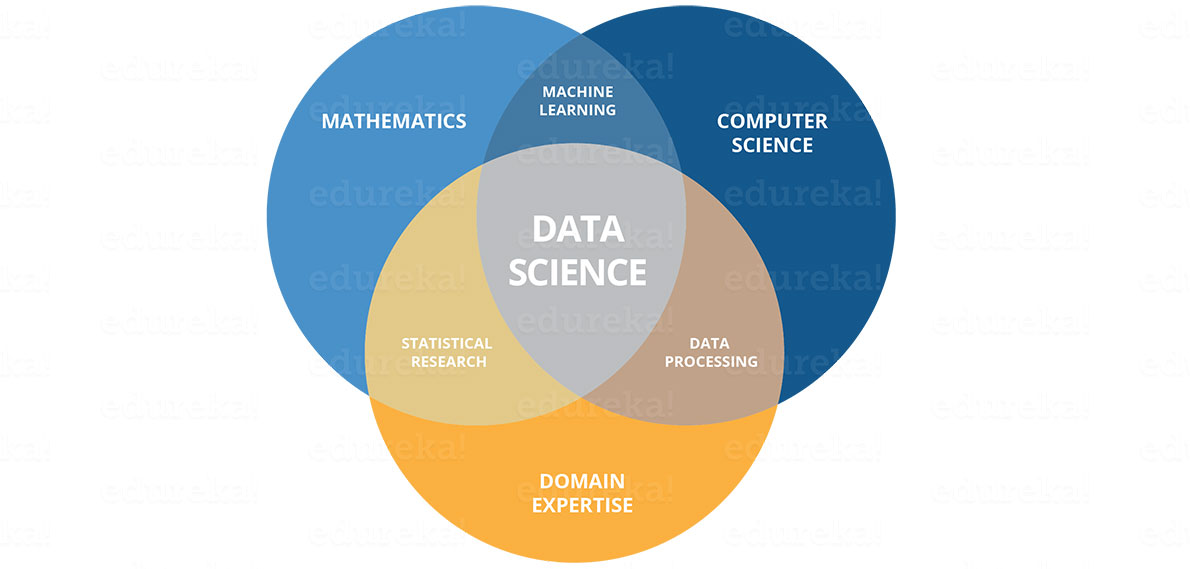
Being a Data Scientist is easier said than done. So, let’s see what all you need to be a Data Scientist. A Data Scientist requires skills basically from three major areas as shown below.
As you can see in the above image, you need to acquire various hard skills and soft skills. You need to be good at statistics and mathematics to analyze and visualize data. Needless to say, Machine Learning forms the heart of Data Science and requires you to be good at it. Also, you need to have a solid understanding of the domain you are working in to understand the business problems clearly. Your task does not end here. You should be capable of implementing various algorithms which require good coding skills. Finally, once you have made certain key decisions, it is important for you to deliver them to the stakeholders. So, good communication will definitely add brownie points to your skills.
I urge you to see this Data Science video tutorial that explains what is Data Science and all that we have discussed in the blog. Go ahead, enjoy the video and tell me what you think.
What Is Data Science? Data Science Course – Data Science Tutorial For Beginners | Edureka This Edureka Data Science course video will take you through the need of data science, what is data science, data science use cases for business, BI vs data science, data analytics tools, data science lifecycle along with a demo.
In the end, it won’t be wrong to say that the future belongs to the Data Scientists. It is predicted that by the end of the year 2018, there will be a need of around one million Data Scientists. More and more data will provide opportunities to drive key business decisions. It is soon going to change the way we look at the world deluged with data around us. Therefore, a Data Scientist should be highly skilled and motivated to solve the most complex problems.
If your company is taking steps to be a more digitally engaged business, congratulations – you’re on the path to innovation and success. But when trying to deliver high quality digital products across platforms on a variety of operating systems and networks, it’s important to remember to stay focused on software testing trends for the all-important user experience. To put any idea into a practical action plan, you need a strategy. The same goes for mobile testing: if you don’t have a strategy, you cannot test effectively and efficiently. In this article, we’ll explain shortly the factors you need to take into consideration when creating a winning testing strategy.
Software Testing Trends – Business processes built around the QA testing discipline
The most measured approach is to ensure that QA testers and business users review requirements, designs, and test cases, early and often, in order to ensure that every critical flow is understood across all teams. This is the most fundamental institutional QA strategy along which business users in any software organization should align themselves.
Software Testing Trends – Artificial Intelligence and Machine Learning in Testing
Intelligent automation will continue to be on the software testing radar in 2020, according to a variety of reports. Applications of artificial intelligence and machine learning (AI/ML) have been leveraged in software test automation before. AI makes testing smarter. Teams can leverage AI/ML to optimize their automation strategies, adapt faster, and operate more effectively.
Software Testing Trends – Demands for Cybersecurity and Risk Compliance
The digital revolution brings about increasing security threats. CIOs and CTOs from almost every enterprise across all sectors continue to acknowledge the importance of security testing of their software, applications, network, systems. Software developing teams even work with their partners to make their products more resilient to threats, taking the cybersecurity shield to the next level.
Testing for security helps secure not only transactions (be it money or data), but also protection of their end-users. Because cyber threats can take place in any form, at any moment, security testing will continue to be a popular topic in the following year. Take a look at National Cyber Securitie’s info on Risk management guidance here.
Software Testing Trends – More data, better data
The development of data science creates multiple ways for QA teams to get test data. New frameworks and algorithms facilitate the process of test creation and increase case coverage. Using more tools for data gathering is a trend, one of the latest in software testing technology.
In 2020, testing teams will be able to obtain yet more testing data, recording user actions, and on-site behavior in detail. However, data gathering is not the main priority of the year. Instead, testing teams are looking for ways to process data efficiently and transform it into relevant insights.Storing data requires effort and money. The more information you store — the harder it is to navigate complex databases.
Software Testing Trends –Test Automation In Agile Teams Test Automation was the top testing trend in 2019 when 44% of the IT companies used it for almost 50% of their testing, and in 2020 it is expected to only get higher. Test automation has become a significant tool in software testing because the number of organizations toadopt the Agileand DevOps methodologies for fulfilling the demand for quality is continuously increasing.
Test automation software helps in performing repetitive tasks, detecting bugs faster and more accurately, ensuring the coverage and providing continuous feedback loops. These are the reasons that IT organizations can save a lot of time, money and human resources if they use automated testing in their quality assurance process. Learn more about test automation here.
How can Estio Training help with your Software Testing & Cyber Security
To learn more about how Estio can support your business with developing Software Tester or Cyber Security Technologist skills, please take a look at our Software Tester & Cyber Security Technologist apprenticeship. To read more industry insights please take a closer look at our articles relating to the Software Tester & Cyber Security Technology industry
The Coronavirus Explained & What You Should Do!
To find out more about how Coronavirus (COVID-9) please watch the video provided below.
In December 2019 the Chinese authorities notified the world that a virus was spreading through their communities. In the following months it spread to other countries, with cases doubling within days. This virus is the “Severe acute respiratory syndrome-related coronavirus 2”, that causes the disease called COVID19, and that everyone simply calls Coronavirus. What actually happens when it infects a human and what should we all do?
Get in touch!
To find out more about how Estio Training can support you with developing the very best Digital Apprentices, complete this form to arrange contact with one of our representitives.
Artificial Intelligence is a collection of technologies that excel at extracting insights and patterns from large sets of data, then making predictions based on that information. That includes your analytics data from places like Google Analytics, automation platforms, content management systems, CRMs, and more.
5 Buisnesses using Artificial Intelligence in 2020
With a large number of organizations showing interest in obtaining analytics and artificial intelligence (AL) products and services, a host of companies have hustled to fill the need. According to Forrester, “53% of global data and analytics decision makers say they have implemented, are in the process of implementing, or are expanding or upgrading their implementation of some form of artificial intelligence.”
Alibaba is china’s ecommerce company which sells more than Amazon and eBay combined. Alibaba is the world’s largest e-commerce platform that uses Artificial Intelligence every day to predict what its audience wants to buy but also using AI to automate the product description using natural language generation. Alibaba also have Alibaba City Brain where they are offering there AI services to china’s cities to help create smart cities.
2. Alphabet Alphabet is a parent company of Google that are focusing a large share of their attention to self-driving cars with Waymo the company’s self-driving technology division. Waymo was created to help reduce the number of crashes which is currently being trailed in California for self-driving taxies. Another AI development from google is Google Duplex with AI voice interface can make phone calls and schedule appointments using natural language processing.
3. Amazon Amazon is America’s largest e-trailer company that thrives using AI with its well known digital voice assistant, Alexa. Amazon also use AI to ship things to you before you even think about buying it using what they call anticipatory shipping. With Amazons level of confidence, they are able to predict what a person is going to buy from data about a person’s buying habits with predictive analytics. The e-retailer also offers Amazon go a new convenience store concept where there is no checkout required. The stores use AI technology to track what items you pick up and charge for them automatically.
4. Facebook Facebook is a well known social networking site that has invested a huge amount of money into AI and deep learning technology and have developed a tool called Deep Text which now automatically understands the words you type and the meaning behind them. Also, Deep face which is a utility used to help Facebook recognise faces anywhere on the internet. Facebook’s Deep face is now in fact better then human face recognition capability with creating 3-D images of a persons face from an uploaded photograph and then looking where else it is on Facebook to help make new friend suggestions.
5. Microsoft Microsoft use AI with smart machines and focus on the machines now being central to everything they do as they strongly believe it to be the future of software. From computer software such as office with spell checker to using AI in machines to detect disseises early on transforming not only human healthcare but also animal healthcare with helping prevent the extinction of endangered animals such as the snow leopard as well as collecting data of their numbers and their where abouts.
How can Estio Training help with your Data Analytics
To learn more about how Estio can support your business with developing Cyber Security skills, please take a look at our Data Analyst apprenticeship. To read more industry insights please take a closer look at our articles relating to the Data Analyst industry
How to Prepare Data for Machine Leaarning and A.I
Artificial Intelligence is only as powerful as the quality of the data collection, so it’s important to prepare data for Machine learning correctly to ensure no data bias in the prediction models.
Artificial Intelligence reveals unexpected insights and good data collection is driven by knowing we’re all subject to bias. So instead of only feeding a subset of your data to a machine learning model, dump it all in. Even the stuff you think is irrelevant. If it’s irrelevant, the algorithm will ignore it.
Get in touch!
To find out more about how Estio Training can support you with developing the very best Digital Apprentices, complete this form to arrange contact with one of our representitives.
Python Python has not seen a meteoric rise in popularity like Java or C/C++. Also, Python is not a disruptive programming language. But from the very beginning, Python has focused on developer experience and tried to lower the barrier to programming so that school kids can also write production-grade code
C and C++ C and C++ have 20% popularity and it is going to continue due to its legacy system and inherence. But as they are basic programming language they would also continue to take their spot as one of the Top programming languages even in 2020.3. R RIn the coming years, R is slowly gaining popularity due to the increase in popularity of data analyzing. This programming
language is mainly used by Data scientists but it far behind when compared to python which has many Active developers with many modules and libraries of data science.4. Java Java scored a rating of 89 out of 100 in Google trends as of January 2019. In December 2019, the number dropped down to 59. This decrease could be attributed to widespread use of Python as an alternative and the intense competition between Python Vs Java.5. JavaScript JavaScriptpopularity can be attributed to the growth of popularJavaScriptlibrary and framework likenode.js, etc.JSis the language for the dynamic website and this going to be top for coming years because of its active development, support fromMozillaand penalty oflibraries and frameworks. So, if someone wants to be web development,javascript is a must.
One of the most important skills to learn in today’s world is to know how to write a computer program. Today, computers have entered in almost every industry. Be it the autopilot in an aircraft or digital speedometer in your bike, computers in various forms surround us. Computers are extremely useful for an organization to scale up well. Gone are the days of pen and paper. Today, in order to store and access your information, you absolutely need computers.
Programming in 2020
With time old programming languages become obsolete while new programming languages are launched, but they never gain traction. A common question amongst beginners (and coders alike) is the programming language they should invest learning in, that is in demand, stable outlook, and plenty of jobs.
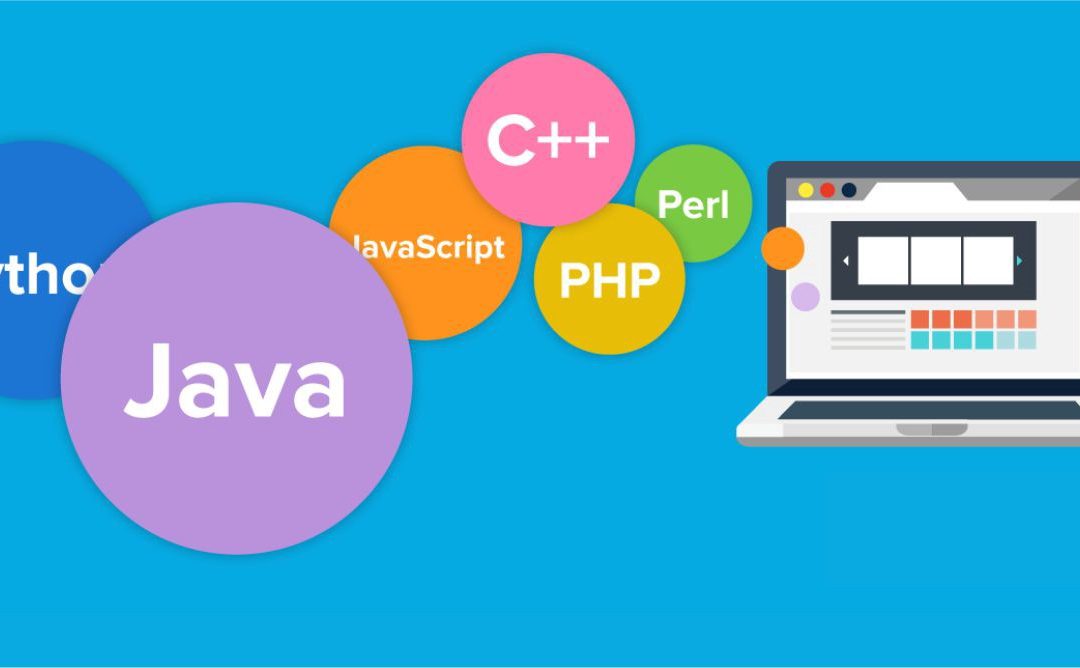
The world of Programming is one which keeps changing with each year. We have some top programming languages such as Java and JavaScript which have an almost eternal place in such lists. This list will give you an idea of the 5 most relevant programming languages of today, and perhaps motivate developers to learn and businesses to leverage one of these.
How can Estio Training help with your Software Development
To learn more about how Estio can support your business with developing Software Developer skills, please take a look at our Software Developer apprenticeship. To read more industry insights please take a closer look at our articles relating to the Software Developer industry.
Sorry, there are no polls available at the moment.
Top 10 Programming Languages In 2020 | Best Programming Languages To Learn In 2020 | Edureka
To find out more about the top programming languages this year, Please wach the video below.
This video will introduce you to the most trending programming languages which you must learn to succeed in 2020. These programming languages are predicted to create a market shift and open up a huge number of job opportunities in 2020.
Get in touch!
To find out more about how Estio Training can support you with developing the very best Digital Apprentices, complete this form to arrange contact with one of our representitives.
Google has made the decision to join Safari and Firefox in blocking third-party cookies in its Chrome web browser. But what are third party cookies and how does it effect marketing? Well cookies are a tiny file dropped by your browser on to your computer’s hard drive when you visit a website, they contain records of your interaction e.g. what you’ve clicked on or whether you are signed in to a site. Cookies do not collect personal data from your computer, only data created by your browsing. When you enter a web address into your browser,a search is made for existing cookies associated with that site. A third-party cookie are cookies that are set by a website other than you are currently on.
After the recent headlines, some commentators have already labelled the third-party data industry as “dead”. Although there are plenty of unknowns, one thing is certain – come 2022, companies that have built their business on selling third-party data for targeting will need to seek out new opportunities in analytics and insight generation to survive. The need for marketers to learn more about their consumers will not go away, so there is a clear opportunity to expand into this area, but doing so will need to involve different models, higher standards for data ethics and compliance with new laws.
For 25 years, as the world changed around us, one thing in advertising remained constant: the cookie. Google’s announcement that it will eliminate third-party cookies from Chrome by 2022 to provide users with “more transparency, choice and control over how their data is used” is a good reminder of the primacy of user needs and that in advertising, as in all things, you should take nothing for granted.
So, what do we know about our new post-third-party cookie future? Right now, the answer is not much, but this gives us the opportunity to imagine and determine a better one. Google has announced its “Privacy Sandbox”, a collection of anonymised signals within a user’s Chrome browser that provide an alternative to cookies in a privacy-first way. Currently in its infancy, the particulars will be ironed out by the World Wide Web Consortium (W3C) – the law makers for the internet – over the next two years.
For brands and agencies, new “clean room” environment like Google’s Ads Data Hub, and platforms from newer companies like Infosum that enable data matching and analysis in privacy-first environments, may become vital tools for matching datasets in an ethical and compliant way.
Estio Training Ltd is a specialist Digital Industry Apprenticeship Provider. At Estio we have an Innovation and Development team that focus on digital and online learning.
For more information on Estio Training and our apprenticeships please visit https://estio.co.uk.

 This testing helps in the evaluation of the functionality as well as the performance of different applications. In the big data testing, the testers need to verify the effective processing of the terabytes of data. While data quality is an important factor of this testing, the quality is checked in terms of accuracy, validity, consistency, conformity, duplication, and more.
 The digital revolution comes with many security threats. As such, CIOs and CTOs from almost every enterprise across all sectors continue to recognize the importance of security testing for their software, systems, applications, network. Software teams have to even work with their partners to make their products more resilient to threats, taking the cybersecurity shield to the new level.




 Phase 1—Discovery: Before you begin the project, it is important to understand the various specifications, requirements, priorities and required budget. You must possess the ability to ask the right questions. Here, you assess if you have the required resources present in terms of people, technology, time and data to support the project. In this phase, you also need to frame the business problem and formulate initial hypotheses (IH) to test.

 Here, you will determine the methods and techniques to draw the relationships between variables. These relationships will set the base for the algorithms which you will implement in the next phase. You will apply Exploratory Data Analytics (EDA) using various statistical formulas and visualization tools.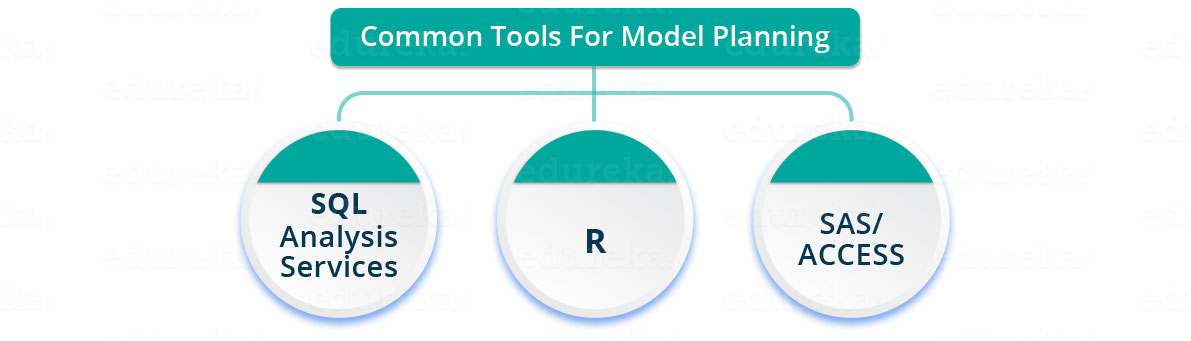
 In this phase, you deliver final reports, briefings, code and technical documents. In addition, sometimes a pilot project is also implemented in a real-time production environment. This will provide you a clear picture of the performance and other related constraints on a small scale before full deployment.
 Phase 6— Communicate results: Now it is important to evaluate if you have been able to achieve your goal that you had planned in the first phase. So, in the last phase, you identify all the key findings, communicate to the stakeholders and determine if the results of the project are a success or a failure based on the criteria developed in Phase 1.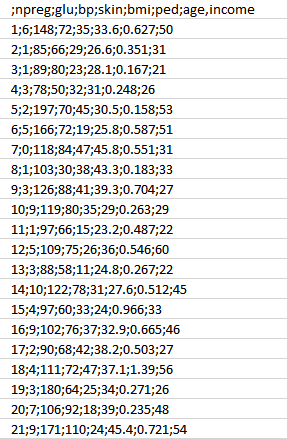


 But when trying to deliver high quality digital products across platforms on a variety of operating systems and networks, it’s important to remember to stay focused on software testing trends for the all-important user experience. To put any idea into a practical action plan, you need a strategy. The same goes for mobile testing: if you don’t have a strategy, you cannot test effectively and efficiently. In this article, we’ll explain shortly the factors you need to take into consideration when creating a winning testing strategy.
 the importance of security testing of their software, applications, network, systems. Software developing teams even work with their partners to make their products more resilient to threats, taking the cybersecurity shield to the next level.

 what you’ve clicked on or whether you are signed in to a site. Cookies do not collect personal data from your computer, only data created by your browsing. When you enter a web address into your browser,a search is made for existing cookies associated with that site. A third-party cookie are cookies that are set by a website other than you are currently on.
Recent Comments